
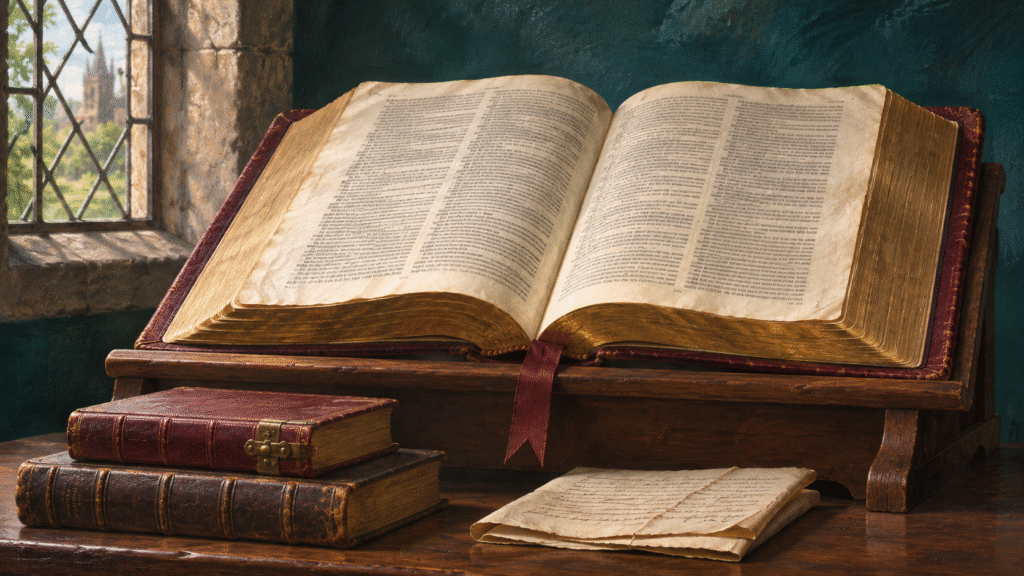
Scripture must govern the pulpit, regardless of a church’s denomination or independence. This conviction, called Sola Scriptura, means that Scripture is the church’s only infallible rule of faith and practice. Pastors and confessions possess real but subordinate authority; all must submit to God’s Word.
This principle stood at the heart of the Protestant Reformation. The Reformers challenged teachings and practices they judged contrary to Scripture, insisting that church authorities could be corrected by it. Their concern remains relevant: trusting religious leaders must never replace examining their teaching against God’s Word.
Today, false gospels and distorted interpretations still appear beneath Christian language. Listen for whether the preacher explains the biblical author’s meaning or recruits isolated verses to support his own message. Paul’s instruction remains direct: “Preach the word!” (2 Timothy 4:2, NKJV).
Some churches soften difficult teachings to avoid offending hearers. Yet Scripture proclaims both love and forgiveness and humanity’s preference for darkness over light (John 3:19–21). God’s patience must not be mistaken for approval: He “now commands all men everywhere to repent”, with judgment appointed (Acts 17:30–31, NKJV).
Review the complete statement of faith and several sermons. Does Scripture govern teaching about marriage, holiness, money, leadership, and spiritual experiences—even when unpopular? Examine Matthew 19:4–6, 1 Thessalonians 4:3–7, and 1 John 4:1. Neither cultural acceptance, financial success, nor a claimed revelation can overturn biblical truth. A transparent church explains its convictions and welcomes biblical examination. Look for faithful interpretation.