
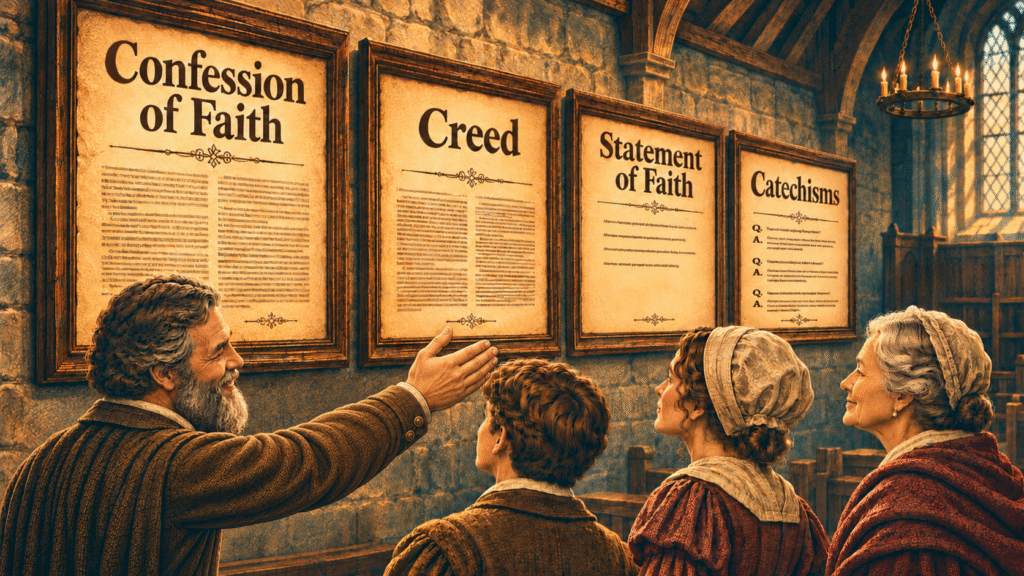
A confession of faith is a public, organized summary of what a church believes the Bible teaches. It explains the church’s convictions about God, Scripture, salvation, and Christian life so you can understand what it teaches before joining.
Why isn’t saying “We believe the Bible” enough? Churches can use the same words while interpreting Scripture differently. A confession makes those interpretations clear. It helps you ask informed questions and compare a church’s teaching with Scripture.
Scripture remains the final authority. A confession does not add revelation or carry the Bible’s divine authority. Its teaching must be tested against God’s Word, following the Bereans’ example of examining what they heard (Acts 17:11).
Historic examples include the Westminster Confession of Faith, used by Presbyterian churches, and the Second London Baptist Confession of 1689, used by many Reformed Baptist churches. These documents explain shared Christian doctrines and convictions on which their traditions differ.
Confessions also support doctrinal accountability. Members can compare what leaders teach with what the church publicly professes. This serves Paul’s instruction to watch both life and doctrine closely (1 Timothy 4:16). However, publishing a confession does not guarantee that a church faithfully follows it.
Where should you look? Start with the church’s “What We Believe” or “Doctrine” page. Ask which confession it adopts, whether it takes exceptions, and how that confession shapes preaching and membership instruction.
Look for clear beliefs accompanied by faithful teaching and loving practice.
Continue next article: Coming soon