
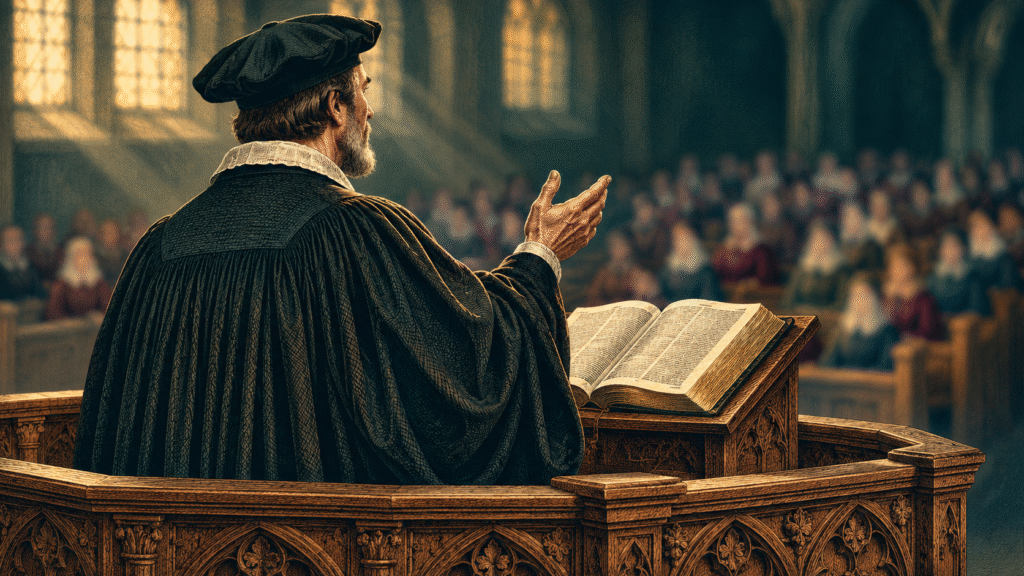
Preaching style shapes how a congregation learns Scripture, understands God, and grows in discernment. While faithful preaching always seeks to proclaim Christ from the Word, how the Word is handled week by week has lasting effects on theological depth, spiritual maturity, and biblical literacy.
Modern evangelical topical preaching begins with a topics, life problem, or question. As a pastor what does the Bible say about my subject? Where and what passages can support topic. Frequently drawn from contemporary life, personal experience, and culture. Often uses memorable points, stories, principles and practical steps. Modern evangelical topical preaching may emphasize encouragement, understanding, faith, or practical action.
Expository / Exegetical preaching seeks to draw meaning out of the text as it unfolds in its original context. Often practiced verse-by-verse or through entire books of the Bible, this approach has deep historical roots in the Reformation. Preachers exegete the principal text, then uses other passages to confirm and illuminate the doctrine. The goal is to allow the scriptures to speak for themselves as intended by the author. The preachers aim is careful exegesis, grammatical-historical hermeneutics, and letting Scripture set the agenda for the message or doctrine. Over time, congregations shaped by this preaching tend to develop strong biblical frameworks, discernment, and confidence in reading Scripture for themselves.
Sequential (verse-by-verse) preaching is a common form of exposition, where passages are taught in order. This guards against selective teaching and helps prevent difficult texts from being ignored. It trains both pastors and people to submit to the whole counsel of God (Acts 20:27).
Thematic or topical preaching organizes sermons around subjects rather than texts. When done carefully and anchored in sound exegesis, it can be useful for addressing specific doctrinal or pastoral issues. However, in many modern evangelical contexts, topical preaching drifts toward proof-texting, personality-driven messaging, or cultural relevance. Popular evangelical communicators may excel in storytelling or motivation, but without disciplined hermeneutics, congregations can become biblically shallow, dependent on the preacher, and vulnerable to doctrinal confusion.
Faithful preaching goes beyond motivating or encouraging a congregation. It requires careful training in hermeneutics, biblical theology, church history, and the original context of Scripture so that God’s Word is explained rather than reshaped. For this reason, our directory highlights preaching styles to help seekers understand not only what is taught, but how Scripture is handled—because methods shape messages, and a Gospel-shaped message forms a Gospel-shaped faith.